
Convergence Insufficiency in Children: When Should Parents Consider Vision Therapy?
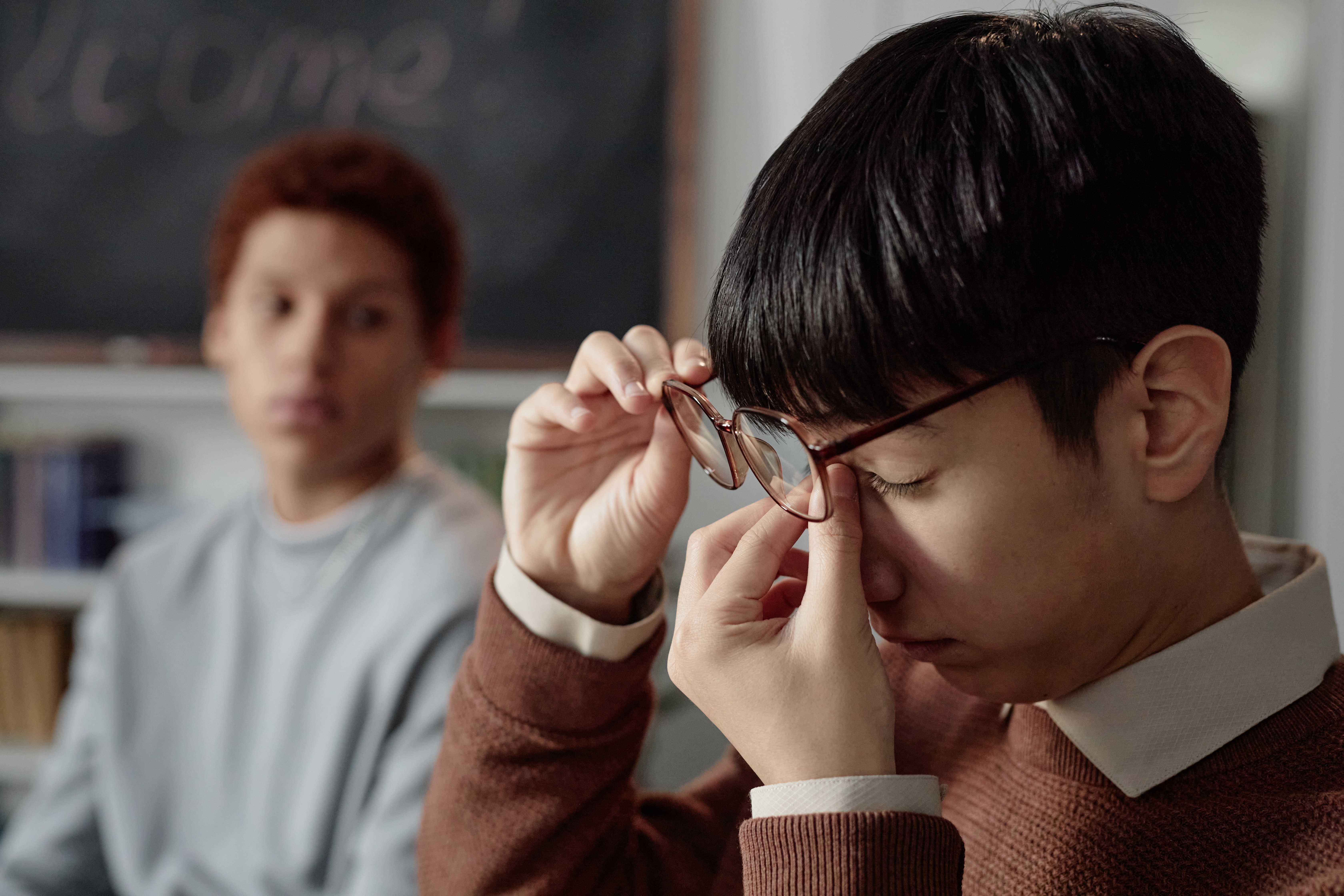
Reading, homework, and other close-up activities require a child's eyes to work together. When the eyes have trouble maintaining that coordination, even a child with clear distance vision may experience discomfort or difficulty concentrating on near tasks. One possible cause is convergence insufficiency, an eye teaming condition that can be overlooked during basic vision screenings. At Advanced Vision Therapy Center, we help Boise families understand when a more detailed binocular vision assessment may be appropriate.
What Is Convergence Insufficiency?
Convergence is the inward movement of both eyes when looking at something nearby, such as a book or tablet. Convergence insufficiency occurs when the eyes have difficulty turning inward or maintaining that position comfortably. The condition may cause intermittent double vision, blurry print, headaches, or eye fatigue during close work.
A child can have 20/20 eyesight and still experience convergence insufficiency. Clear vision on an eye chart does not necessarily show how well the eyes coordinate over time.
Signs Parents Should Watch For
Children may not realize that the way they see during reading is unusual. Parents may notice:
· Frequent headaches or tired eyes after reading or homework
· Complaints that words look blurry, move, or appear double
· Closing or covering one eye during near activities
· Losing their place, rereading lines, or needing frequent breaks
· Avoiding close work because it feels uncomfortable
These signs do not automatically indicate convergence insufficiency. Other vision conditions and nonvisual factors can produce similar difficulties, so a thorough evaluation matters.
When Should Parents Schedule an Evaluation?
Consider an assessment if your child repeatedly experiences these symptoms, particularly when they appear during reading, writing, or screen use. Persistent complaints deserve attention even if your child has passed a school vision screening or does not need glasses.
During a binocular vision assessment, we examine how the eyes align and work together at near distances. Testing may include the near point of convergence, the ability to maintain single vision, focusing function, and other relevant findings. This helps us determine whether convergence insufficiency is present and whether treatment is appropriate.
How Can Vision Therapy Help?
For children diagnosed with symptomatic convergence insufficiency, office-based vision therapy may be recommended to improve eye coordination. Treatment involves guided activities that progressively challenge how the eyes converge and maintain alignment. We tailor the plan to each child's examination findings and monitor progress over time.
Research supports office-based vergence and focusing therapy for improving measurable eye teaming function in children with convergence insufficiency. Symptom improvement varies, and vision therapy is not a treatment for learning disabilities. Our goal is to address an identified visual problem rather than assume that every reading difficulty is vision-related.
If your child has ongoing eye strain or difficulty with near tasks, contact Advanced Vision Therapy Center in Boise, ID, at (208) 377-1310 to schedule a binocular vision assessment and discuss whether vision therapy is appropriate.
MAP

Our Services
Contact Info
Hours of Operation
- Monday Closed
- Tuesday 8:00am - 6:00pm
- Wednesday 8:00am - 6:00pm
- Thursday 8:00am - 6:00pm
- Friday 8:00am - 6:00pm
- Saturday Closed
- Sunday Closed
© 2026 Advanced Vision Therapy Center. All rights Reserved. Accessibility Statement - Privacy Policy - Sitemap
Powered by:
